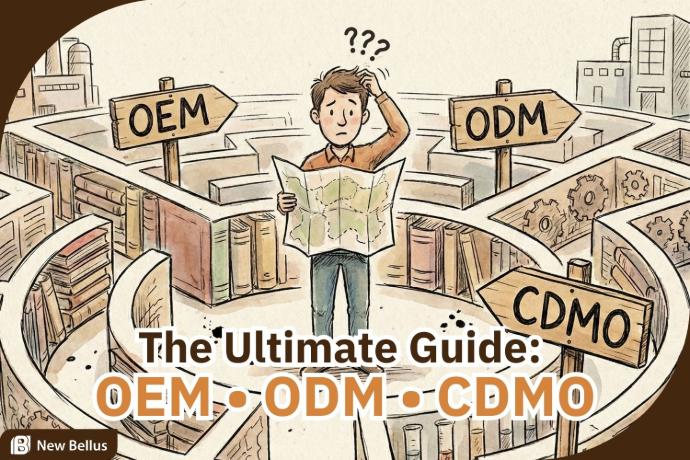
As health awareness rises, the supplement market continues to heat up. Many influencers, group-buying leaders, and startups are eager to launch their own brands. However, when looking for manufacturing partners, they are often confused by acronyms like OEM, ODM, and CDMO.
Which model saves the most cost? Which offers the fastest time-to-market? This is not just about definitions; it is about your business model and profit margins. This article objectively analyzes the differences between these three manufacturing models and shares what "invisible technologies" you should look for in a partner.
Objective Analysis: The Difference Between OEM, ODM, and CDMO
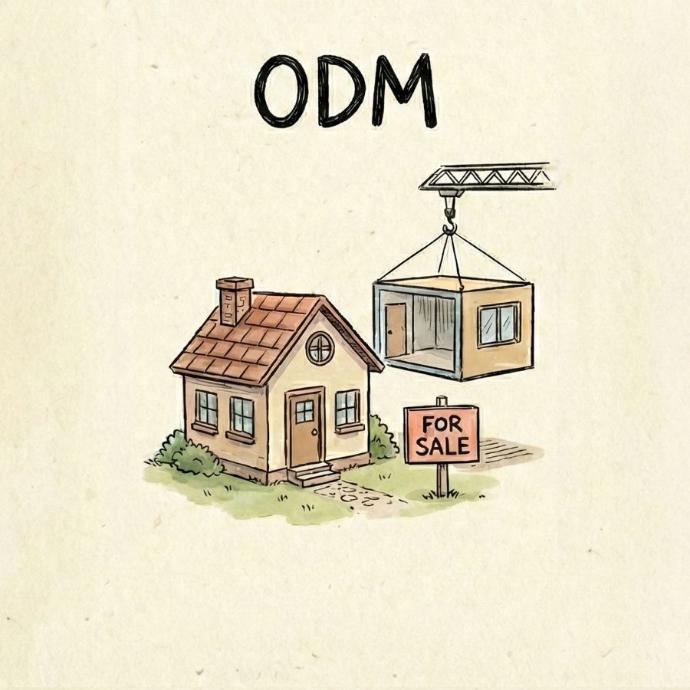
Simply put, the difference lies in "who is responsible for R&D" and "who owns the formulation rights." To make it easier to understand, let's use a "House Building" analogy:

OEM
(Original Equipment Manufacturer)
The brand (you) provides the complete formula, ingredient specifications, and packaging design. The factory is only responsible for manufacturing and packaging.
Pros: The brand retains full control over the formula and Intellectual Property (IP).
Cons: The brand requires a strong internal R&D team and bears the full development risk.
ODM
(Original Design Manufacturer)
The brand defines the requirements (efficacy, cost, target audience), and leverages the factory's mature R&D experience and formula library to design the product. This is a "standing on the shoulders of giants" model.
Pros: High efficiency. Drastically reduces trial-and-error costs and development time. Brands don't need to build an R&D team from scratch and can focus resources on marketing and sales.
Cons: If choosing a traditional "Generic Model," products can easily look and feel like competitors' (high homogeneity), making it hard to establish a unique competitive edge.
CDMO
(Contract Development and Manufacturing Organization)
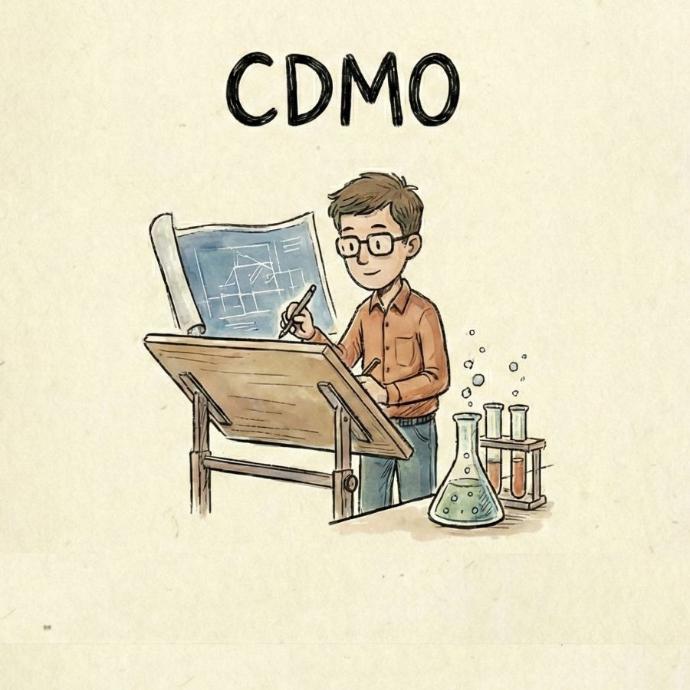
A model rising in the pharmaceutical and high-end biotech sectors, emphasizing deep involvement from "cell line development" and "process optimization" to "clinical trials."
Pros: Suitable for high-barrier new drugs or special medical-grade products, creating a strong technical moat.
Cons: Highest development cost, strict validation processes, long time-to-market, and high initial capital pressure.
Comparison Table: Understanding the Differences at a Glance
| Item | OEM | ODM | CDMO |
| Formulation Rights |
Brand Owner (Must provide full formula) |
Collaboration (Brand sets needs, leverages factory expertise) |
Deep R&D (Joint development for new tech/processes) |
|
Core Advantage
| 100% IP Ownership |
Highest Efficiency, Lower R&D risk & cost |
High technical barrier, strong competitive moat |
|
Suitable For
|
Mature brands with internal R&D teams |
ROI-focused brands, those needing quick market validation |
Pharma, those seeking special medical/patent ingredients |
|
Time-to-Market
| Slow (Self-R&D required) | Fast (Leveraging existing frameworks) |
Slow (Strict clinical/process validation)
|
Market Reality: Why Do Some ODM Products Fail?
If ODM is so efficient, why do many supplements still end up in price wars?
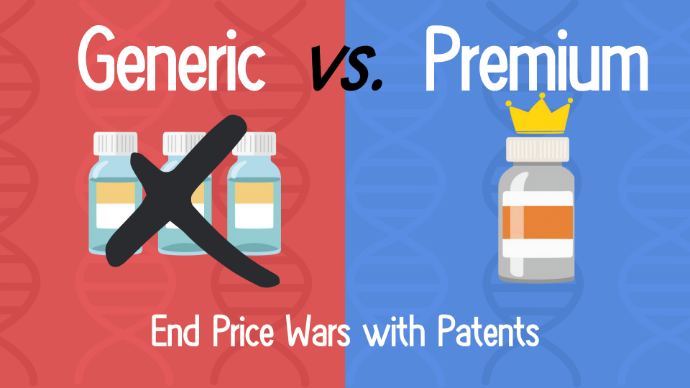
The problem is "Homogeneity." To be fast and cheap, many ODM factories use a "Universal Module" strategy:
Generic Ingredients: Everyone uses the same traded raw materials, lacking uniqueness.
Copy-Paste Formulas: Only minor flavor or packaging tweaks; weak core competitiveness.
Low Barrier: Easily copied by competitors, forcing brands to compete solely on price.
This is the biggest challenge for brand owners: You thought you chose an efficient ODM model, but you accidentally fell into the trap of "me-too" products.
Therefore, when choosing a partner, look beyond price (ISO22000 & HACCP are just the basics). Check if the factory has "In-house Labs" and "Patented Ingredient Development Capabilities." This is the key to differentiating your ODM product.
The New Bellus Solution: Technical ODM
New Bellus understands the dilemma: You want the speed of ODM but the uniqueness of OEM/CDMO. As experts in microbial fermentation with over 30 years of experience, we offer services far beyond traditional definitions:

Advantage 1:
We Don't Just Buy Ingredients, We "Create" Them (Solving Homogeneity)
Most ODMs can only outsource ingredients, leading to similar formulas. New Bellus owns an ISO17025 certified lab and exclusive fermentation technology to "produce ingredients in-house":
Patented Probiotics & Postbiotics: From strain selection to proprietary fermentation equipment, developing ingredients with specific efficacies.
Patented Liquid Fermentation: Significantly enhancing the nutritional value and absorption rate of functional mushrooms. This means: Choosing New Bellus gives your product "Ingredient DNA" that competitors cannot buy.
Advantage 2:
ODM Speed, Customized Soul
We retain the fast time-to-market of ODM but inject exclusive technology into the formula. Our R&D team can flexibly integrate patented fermentation ingredients into mature formula frameworks, helping you find the perfect balance between "Time-to-market" and "Product Differentiation."
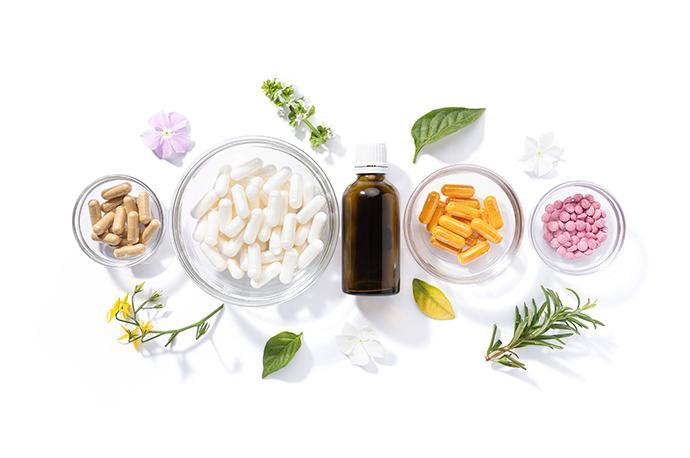
Diverse Dosage Forms: Capsules, powders, tablets, or trendy gummies and drinks.
Rapid Customization: Balancing efficiency with uniqueness.

Advantage 3:
One-Stop Service, Solving Regulation & MOQ
Pain Points Making a product is not just about manufacturing; compliance and certification are crucial.
International Certifications: Our factory is NSF-GMP, FSSC22000, and HALAL certified, helping you expand globally.
Flexible Support: We understand the pressure on startups. Unlike the high barriers of general factories, New Bellus offers flexible Minimum Order Quantity (MOQ) schemes under the ODM model to support brand growth.
Find the Perfect Partner for You
At New Bellus, our goal is simple: To realize your product vision with the most professional fermentation technology and rigorous processes. If you are looking for a partner who offers not just "manufacturing" but exclusive ingredient advantages and comprehensive solutions, please contact us.
💡 Supplement Brand Guide | Concept to Market
Looking for more insights into bringing a supplement concept to market? Explore our “Supplement Brand Guide” video series for practical perspectives on OEM, ODM, and CDMO partnerships, ingredient evaluation, and market trends—helping brand owners make more informed product development decisions.
FAQ
Q1: What is the difference between OEM and ODM in supplement manufacturing?
A: The main difference lies in "Formulation Ownership."
OEM: The brand provides the complete formula and design; the factory is responsible only for production.
ODM: The factory provides mature, ready-to-use formulas for the brand to select or fine-tune. This is suitable for brands aiming for a fast market launch.
Q2: Which model suits me best: OEM, ODM, or CDMO?
A:
Choose OEM: If you have an internal R&D team and prioritize formula confidentiality.
Choose ODM: If you are a startup wanting to enter the market quickly and cost-effectively.
Choose CDMO: If you need to develop special patented ingredients or high-barrier products (e.g., special fermentation processes) and require a partner with deep R&D capabilities.
Q3: How much does supplement manufacturing cost? How should I budget?
A: Costs mainly include raw materials, packaging design, manufacturing fees, and testing fees.
ODM Model: Generally has a lower entry barrier as formulation R&D costs are saved.
OEM/Custom Development: Requires additional budget for R&D and sampling.
Note: Actual prices vary significantly based on the Dosage Form (capsules/drinks/gummies) and the Grade of Ingredients.
Q4: What is the Minimum Order Quantity (MOQ)?
A: MOQ depends on the Dosage Form and Factory Scale. Generally, capsules and tablets have lower MOQs, while liquid drinks or special gummies have higher MOQs due to high production line startup costs. However, comprehensive factories like New Bellus often provide flexible MOQ schemes under the ODM model to support growing brands.
Q5: How do I choose a high-quality manufacturing partner? What certifications matter?
A: Prioritize "Safety" and "Technical Capability."
Basic Standards: Look for FSSC22000 and HACCP certifications.
International Markets: Prioritize factories with NSF-GMP or FSSC22000 certifications.
Technical Indicator: Whether the factory has an In-house Laboratory and Patented Ingredient Development Capabilities is a key indicator of its technical value.